In the marine industry, there are few product categories surrounded by as many stories, opinions and assumptions as underwater lighting.
Some believe brightness alone determines performance. Others assume all underwater lights are fundamentally the same, differing only in shape, light output or price. Then there are the stories surrounding reliability, longevity and durability.
The truth is, not all underwater lights are engineered equally.
Behind every high-performing underwater light lies a combination of optics (or a lack of in most cases), materials science, thermal management, sealing technology and manufacturing expertise. Get those engineering decisions right and the result is a product capable of delivering exceptional light output, outstanding reliability and years of trouble-free operation. Get them wrong and performance quickly begins to suffer.
OceanLED have spent more than two decades developing underwater lighting solutions for some of the world's most demanding marine environments. Much of the technology found in the current product portfolio was originally developed for the superyacht sector, where performance expectations are uncompromising.
So, let’s take a deeper dive into some of the assumptions and truths.
Ask most people what makes an underwater light brighter and they'll probably answer, "More LEDs."
In reality, that's only part of the story.
One of the most overlooked aspects of underwater lighting is optics.
Standard lighting optics are designed to operate in air. However, light behaves very differently when it enters water. Water refracts, scatters and absorbs light in ways that can significantly reduce performance if those characteristics aren't considered during product development.
This is why OceanLED developed optics specifically engineered for underwater environments.
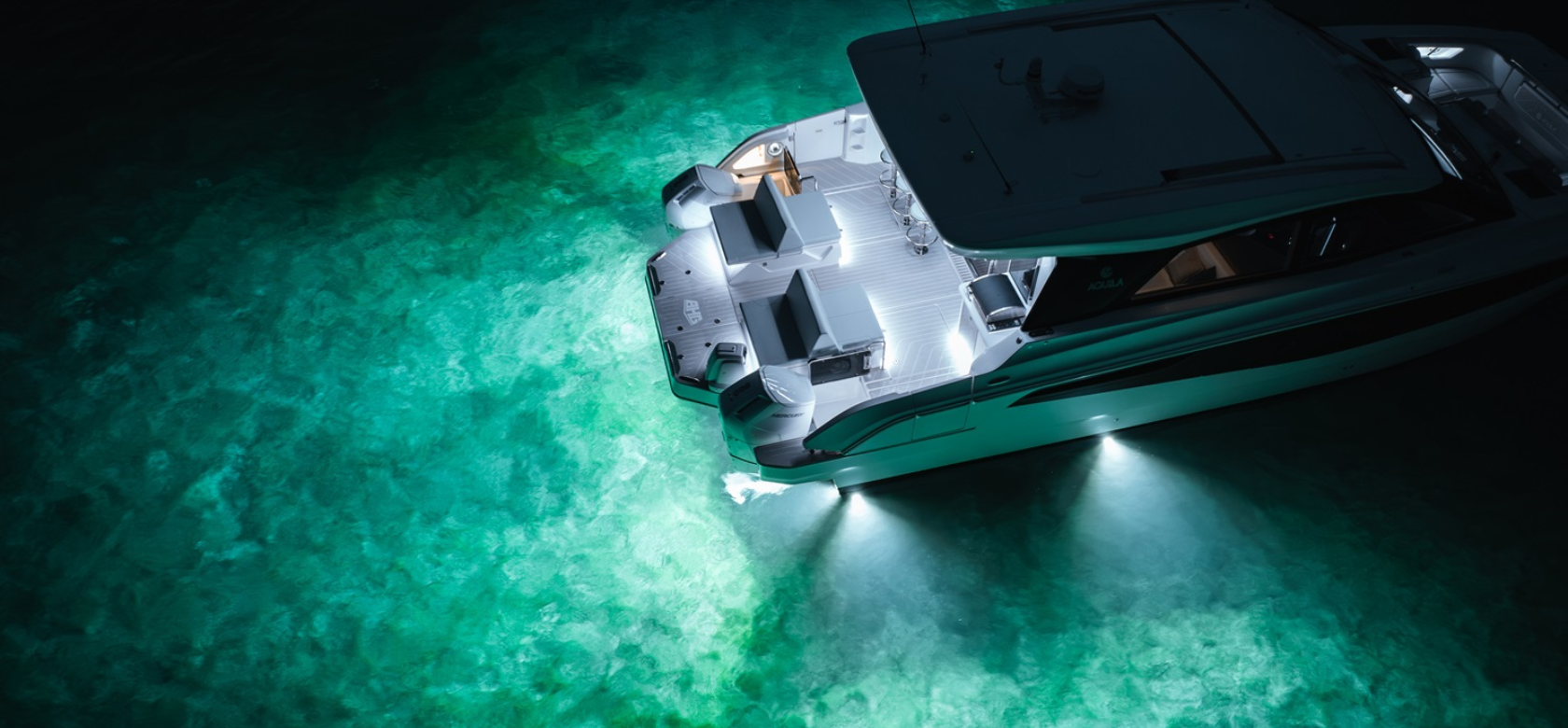
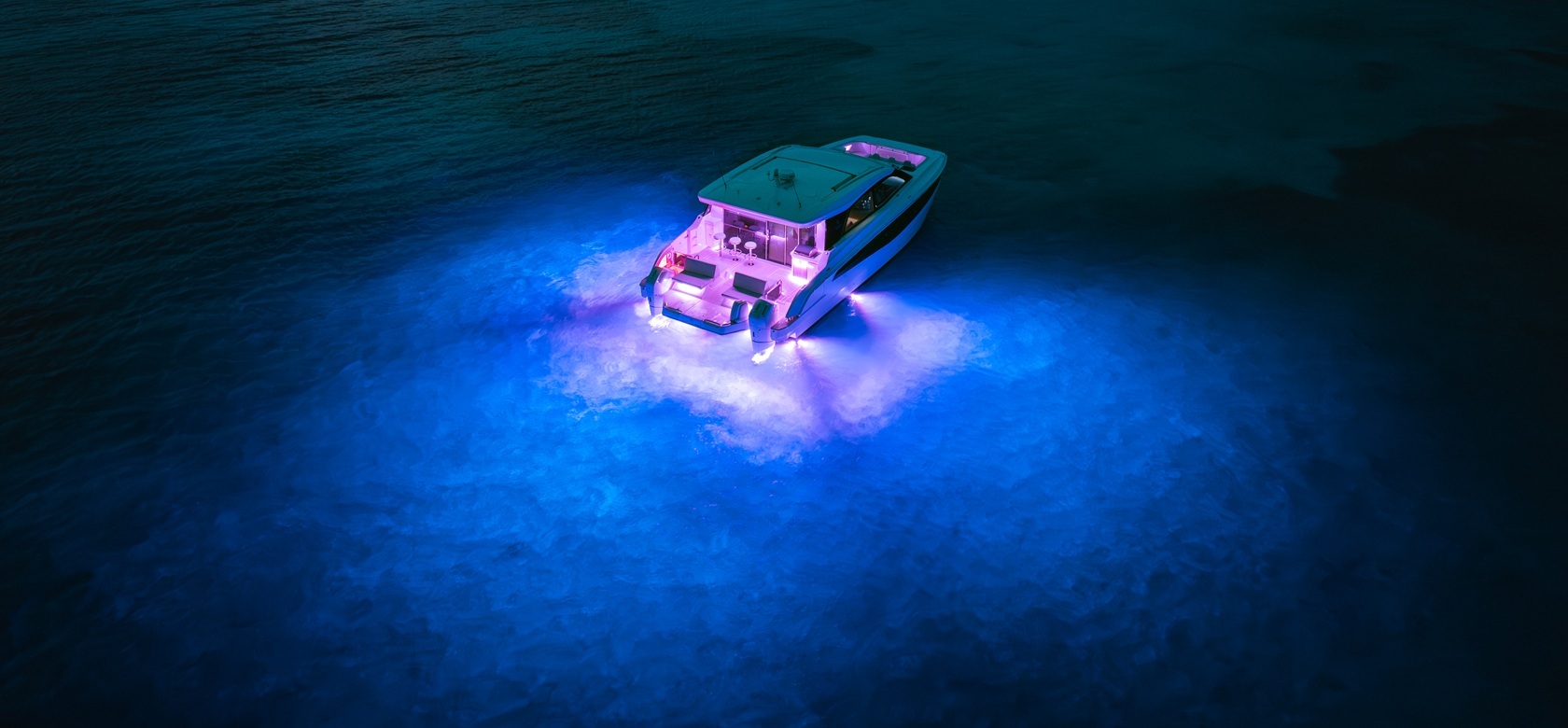
Rather than allowing light to disperse randomly, the optics developed by OceanLED focus and direct the light beam. The result is the ‘OceanLED blade’ affect. The light cuts through the water like a knife, affording greater light penetration, a wider spread of usable light and significantly improved visual impact.
In simple terms, underwater-specific optics allow more of the light produced by the LEDs to be converted into visible, usable illumination beneath the surface.
It's one of the reasons why comparing underwater lights purely on lumen figures rarely tells the full story.
In the very simplest terms, think about how candle light behaves in comparison to a torch.
Chapter Two: Brightness Is More Than a Number
Fixture lumens are an important performance metric, but they don't provide a complete picture.
A poorly controlled light beam wastes significant amounts of light. The light goes up, down, to side, all over the place and you lose lots of the potential performance. Optics ensure every last bit of light is directed where you want it.
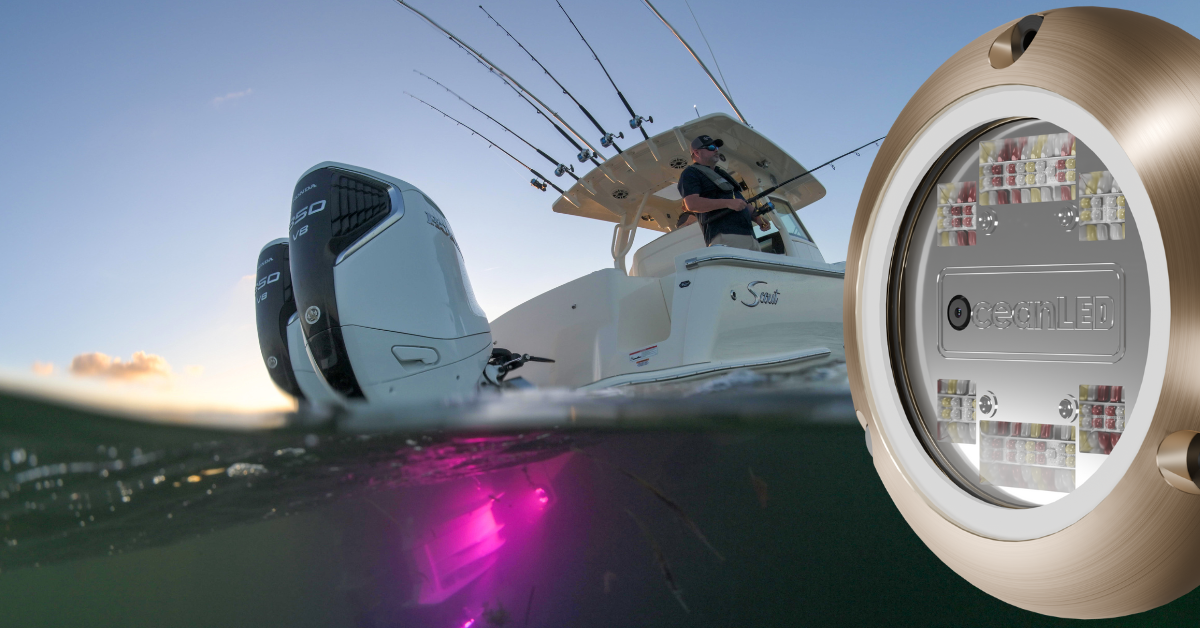
Take the OceanLED Sport Series as an example.
The single colour version delivers 6,000 fixture lumens! The combination of high-output LEDs with advanced underwater optics creates a lighting effect that simply can't be achieved through raw output alone. Even if the manufacturer were to drive the LEDs insanely hard (which would burn them out), it is impossible to achieve the definition and crisp effect of optics.
For boat builders and OEMs, this provides an important advantage.
More effective light distribution means fewer compromises in light placement and greater confidence that the finished boat will deliver the premium lighting experience owners expect.
Marine environments are unforgiving. Particularly if saltwater is involved.
Vibration, impact, temperature fluctuations, stray current in the water and high-pressure cleaning all place enormous demands on underwater lighting systems.
Reliability doesn't happen by chance. It's engineered into every component.
Reliability begins with material selection.
Marine-grade materials are carefully chosen to withstand prolonged exposure to aggressive marine environments. Components are engineered to manage thermal loads efficiently, ensuring LEDs operate within their optimal performance range. (i.e. they’re not given a hard life).
Mechanical design also plays a critical role.
Every underwater light contains a huge number of connections where failures can potentially occur. From the lens sealing systems and cable entry point to internal PCB connections, it all requires careful engineering.
Do all of this correctly, and the result is a product that lasts and OEMs can trust.
Ingress protection ratings are one of those things people often take on faith.
Not all underwater lights are equal when it comes to their water ingress resistance. Largely because very few undergo testing to the highest recognised standards. The test results can be inconvenient for the manufacturer.
OceanLED underwater lights are certified to IP69K.
This is the highest level of ingress protection available under the IP classification system. There isn’t a higher level or a tougher test.
IP69K certification verifies protection against high-pressure, high-temperature water jets. For comparative purposes, most underwater light manufacturers only test their lights to IP68. This counts as waterproof, just the entry level of waterproof.
Certification doesn't replace engineering excellence, but it does provide independent validation of product durability.
Chapter Five: Innovation
Many of the technologies now considered standard in underwater lighting first appeared aboard large yachts, where owners and builders continuously push manufacturers to deliver more sophisticated solutions.
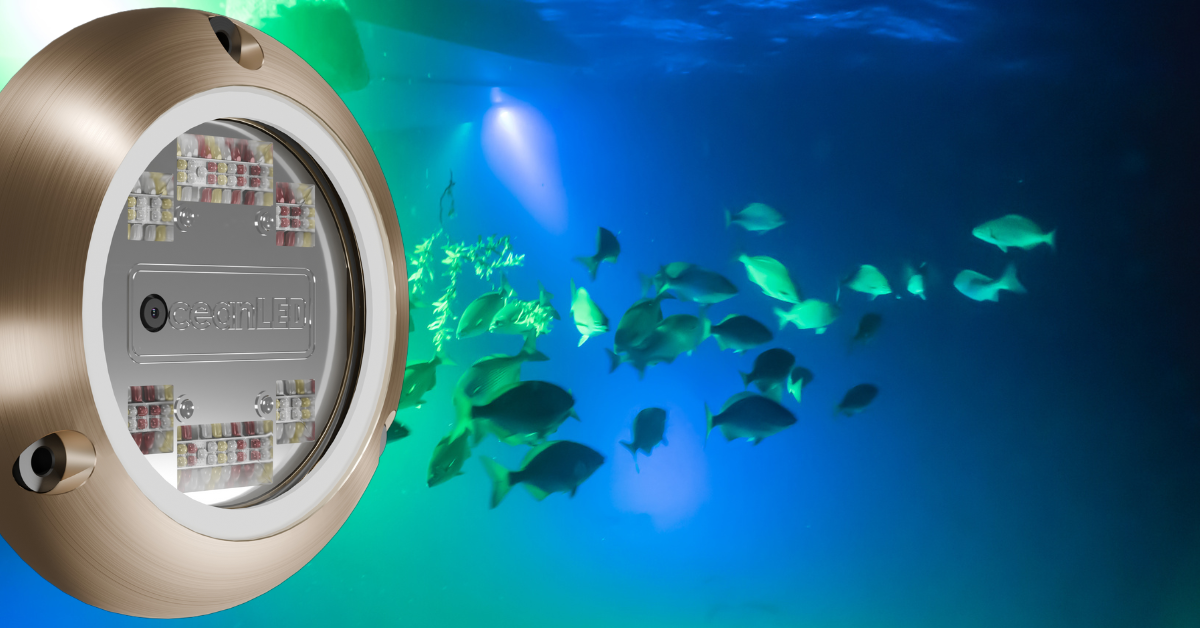
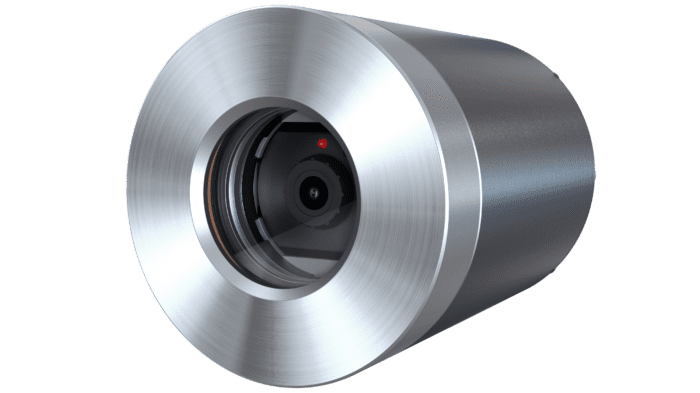
A recent example is the Sport Colours - Camera Edition, which combines a proven Sport Series underwater light with an integrated underwater camera. A world first.
Originally developed to address the needs of modern boat owners, anglers and marine enthusiasts, the system demonstrates how lighting technology continues to evolve beyond simple illumination.
By integrating advanced camera technology into an underwater lighting platform, OceanLED has created competitive advantage you can buy.
It's another example of how superyacht-inspired innovation continues to influence product development across the wider marine industry.
Chapter 6: Warranty
The ultimate test is a manufacturer's willingness to stand behind its products.
Possibly the most important thing to remember, not all warranties are made equal.
OceanLED set a new benchmark with the launch of the No-Hassle Warranty across the Discover Series, X-Series and Sport Series.
Simple but powerful. If your OceanLED underwater light fails for any reason in the first two years, OceanLED replace it, no questions asked.
From an OEMs point of view, it’s a big contributor to lower ownership costs and a better customer experience.
Chapter 7: How Much is it Going to Cost Me?
There's a common misconception that premium performance automatically requires paying more.
The reality is far more nuanced.
Exceptional underwater lighting isn't determined solely by output figures or product cost.
It's determined by engineering.
Advanced underwater optics. Carefully selected materials. Robust sealing systems. Proven manufacturing processes. Independent certification. Continuous innovation.
These are the factors that separate underwater lights from exceptional underwater lights.
The stories you've heard about OceanLED products?
The advanced optics. The exceptional reliability. The superyacht DNA. The industry-leading innovation. The lights that simply keep performing season after season.
Perhaps it's time to take a closer look… Learn more.